
Used car scams: two out of three Italians fear becoming victims of fraud, almost one in five has already experienced it
Transparency note: This press release was originally published in Italian. The text has been machine translated. You can find the original press release here.
Milan, February 4, 2026 – In the used car market, trust remains a crucial factor, but also one of the most fragile. According to a new survey conducted by CARFAX, an international leader in vehicle history information, fraud continues to be one of the main concerns for those buying a second-hand car, especially in Italy. The survey, which involved over 4,000 respondents who had purchased a used car in the last 12 months or intended to purchase one in the next 12 months, illustrates a context in which access to reliable and transparent data is becoming increasingly important.
“In the used car market, the difference between a good deal and a nasty surprise is often hidden in the details of the vehicle's history,” comments Marco Arban, Director of Business Development Europe at CARFAX. “With our vehicle history reports, our goal is to empower consumers to make informed choices, reducing risk and increasing confidence in an industry that still has enormous room for growth.”
Two out of three Italians fear fraud: here are the most feared types of fraud in the used car market
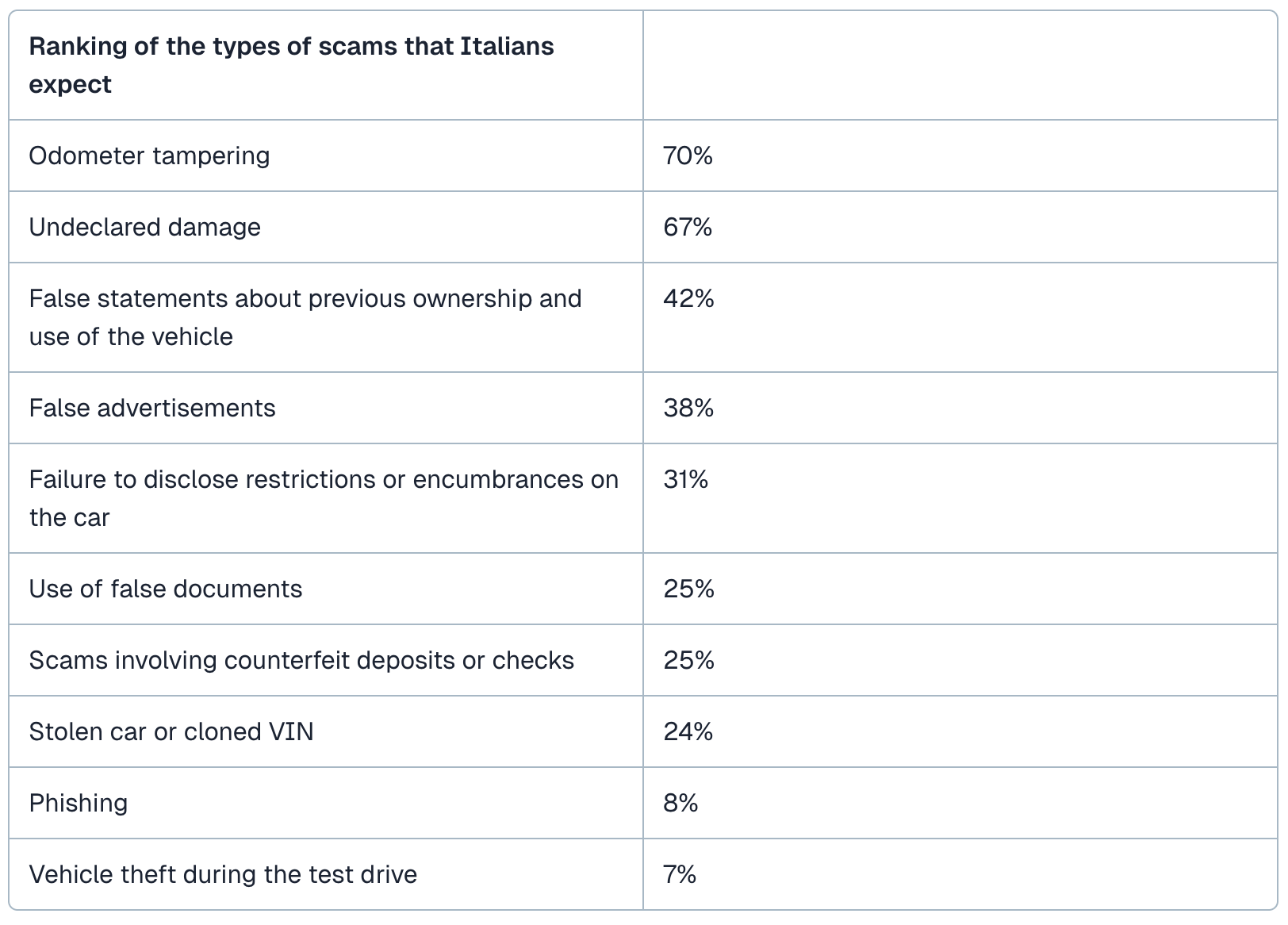
Italians' expectations regarding fraud are far from reassuring. As many as 67% of respondents believe that it is “often” or even “very often” possible to encounter fraud in the used car market, a higher percentage than that recorded in countries such as Spain and Germany. Only a small minority think that scams are rare, while the majority are prepared for the idea that risk is part of the buying experience.
Among the unfair practices that Italians fear most, tampering with the odometer (70%) tops the list, followed by undeclared damage (67%). In third place are false statements about the previous ownership and use of the vehicle (42%), ahead of false advertisements (38%) and failure to disclose restrictions or encumbrances on the car (31%). The use of false documents (25%) and scams involving counterfeit deposits or checks (25%) are also a concern, a figure almost double that of Spain (13%). At the bottom of the ranking are the possibility of encountering a stolen car or one with a cloned VIN (24%), phishing scams (8%), and even vehicle theft during a test drive (7%).
From fears to reality: almost one in five Italians has already been the victim of fraud
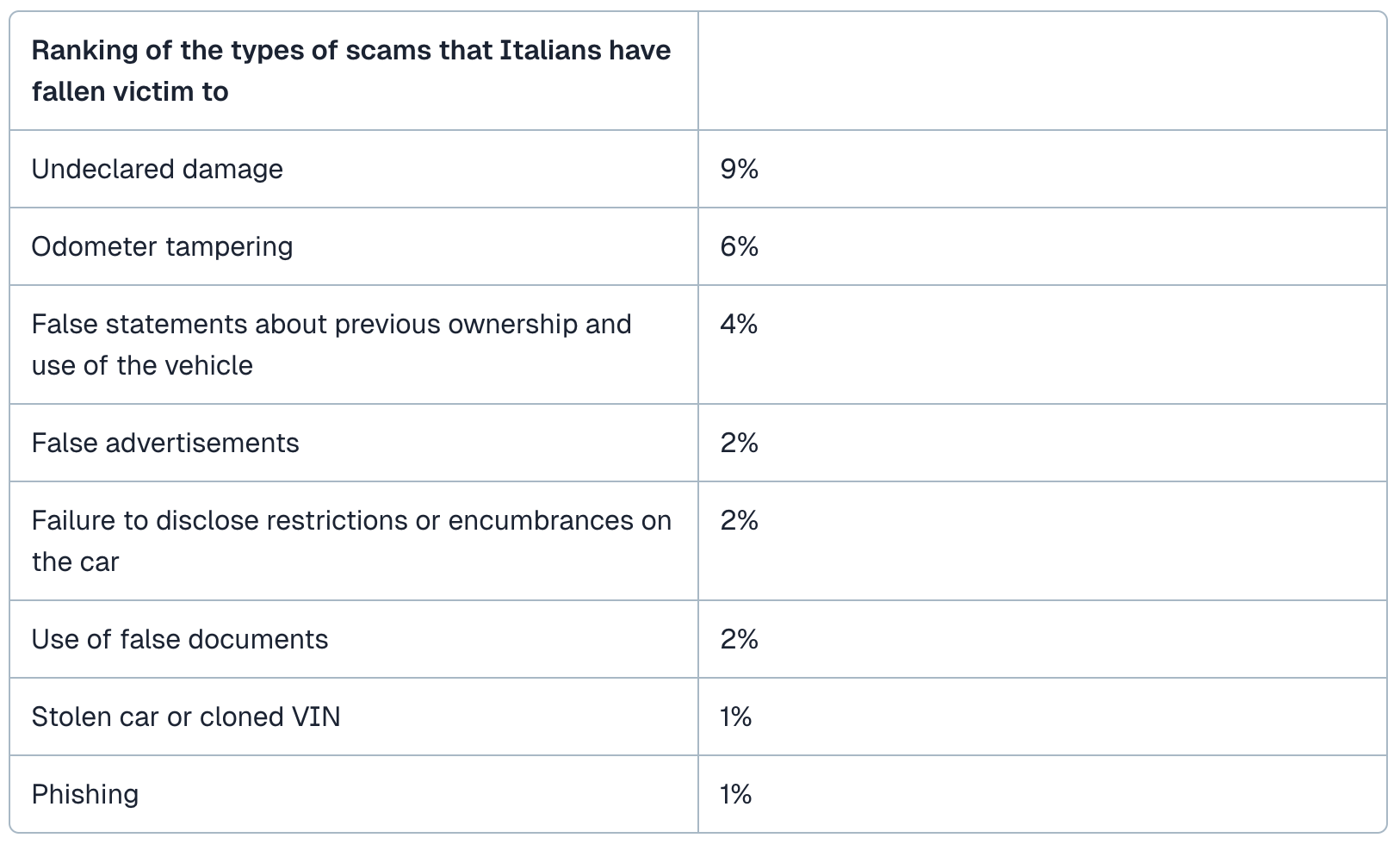
If expectations are high, reality is no less so: 19% of Italians say they have been directly scammed when buying a used car. The most common type of scam involves undeclared damage, reported by 9% of respondents, followed by tampering with the odometer (6%) and lies about previous ownership and use (4%). There are also cases of false advertisements (2%), forged documents (2%), undeclared restrictions (2%) and, albeit to a lesser extent, incidents of cloned VINs or stolen vehicles (1%) and phishing (1%). These figures confirm that fraud is not just an abstract fear, but a real experience for a significant proportion of consumers.
Consumers are more vigilant, but that's not enough: how Italians are trying to protect themselves from fraud
Aware of the risks, Italians are increasingly seeking to protect themselves by adopting a series of preventive measures before completing a purchase. Almost two out of three (64%) say they check the mileage by comparing it with the last service or technical inspection, while 59% ask to see the PRA/ACI registration documentation. Forty-nine percent check the Digital Certificate of Ownership, and 46% pay attention to any signs of tampering with the vehicle. Finally, 43% choose to complete the transfer of ownership through the Sportello Telematico dell'Automobilista (STA), demonstrating a growing focus on official and traceable procedures. This set of precautions reflects an increasingly informed consumer, but also one who is aware that, without the right tools, the risk of fraud remains a variable that is difficult to eliminate entirely.